The official specs, what “with upscaling” really means, and whether the card in your rig is ready for launch week
Phantom Blade Zero, S-GAME’s wuxia action RPG, finally lands on October 29, 2026 on PC (Steam and the Epic Games Store) and PS5. It was supposed to ship September 9, but the studio pushed it back about 50 days in June to put extra time into character models, environments and polish.
That makes it the last big release of a busy month, and the spec sheet has one detail a lot of folks are going to miss: every official target assumes upscaling is turned on. Here’s what the numbers actually mean, which GPUs clear each tier, and what we’d check before launch night.
THE OFFICIAL SPECS AT A GLANCE
S-GAME published the PC requirements on the Steam page when pre-orders opened. There are four tiers: minimum, recommended, a ray tracing tier and a path tracing tier.
| Tier | Target | GPU | CPU | RAM |
|---|---|---|---|---|
| Minimum | 1080p / 30 FPS, upscaling on | GTX 1660 6GB / RX 5500 XT 8GB | Core i7-8700K / Ryzen 5 3600 | 16GB |
| Recommended | 1440p / 60 FPS, upscaling on | RTX 3060 Ti 8GB / RX 6700 XT 12GB | Core i5-10600K / Ryzen 5 5600X | 16GB |
| Ray Tracing | 1080p / 60 FPS, upscaling on | RTX 5060 8GB | — | — |
| Path Tracing | 4K / 60 FPS, upscaling on | RTX 5080 16GB | — | — |
All tiers: Windows 10/11 64-bit, DirectX 12, SSD required. Ray and path tracing rows show the GPU called out in the published specs. Status as of October 19, 2026.
A few other things worth knowing:
- SSD required. Not “recommended,” required. A hard drive won’t cut it.
- Install size isn’t posted for PC yet. The PS5 download is reportedly about 135GB, but the Steam and Epic pages don’t list a PC number. Don’t assume they match, but clearing 150GB or so is the safe move.
- Denuvo. The PC version uses Denuvo anti-tamper.
- NVIDIA features. NVIDIA says the PC version ships with DLSS 4.5 Super Resolution and Multi Frame Generation, plus ray-traced reflections, shadows and caustics.
“WITH UPSCALING” MEANS THESE AREN’T NATIVE NUMBERS
This is the part that matters most. When the recommended tier says 1440p at 60 FPS, it doesn’t mean an RTX 3060 Ti draws every pixel of a 1440p frame 60 times a second. It means the game renders at a lower internal resolution and the upscaler rebuilds the image to 1440p. Same story for the minimum tier at 1080p/30 and the 4K path tracing tier.
That’s not a knock on the game. Upscaling is how most big releases hit their targets now. It just changes how you read the sheet:
- Turn upscaling off and expect lower frame rates than the listed targets on the listed hardware.
- The upscaler you get depends on your card. DLSS 4.5 is confirmed for GeForce RTX owners. As of today, S-GAME hasn’t confirmed FSR or XeSS support. AMD cards and the GTX 1660 (which can’t run DLSS) are on the spec sheet with upscaling assumed, so there should be some option for them, but we’ll wait for the settings menu before saying which.
- Frame generation is a separate thing. Multi Frame Generation adds frames on top of upscaling. It smooths things out, but it isn’t the same as a higher base frame rate.
If you want the full rundown on Quality vs Balanced vs Performance modes and how each vendor’s upscaler works, we covered it in DLSS vs FSR vs XeSS in 2026.
IS YOUR GPU GOOD ENOUGH?
Here’s how common cards line up against the official tiers. Real benchmarks won’t show up until launch week, so treat this as a starting point, not a frame-rate promise.
1080p — GTX 1660, RX 5500 XT and Up
These cards meet the minimum, which targets 1080p at 30 FPS with upscaling. That’s playable, but it’s the floor. Plan on lower settings, and don’t expect ray tracing here.
1440p — RTX 3060 Ti / RX 6700 XT and Faster
This is the recommended tier: 1440p at 60 FPS with upscaling. Cards that are clearly faster than a 3060 Ti, like the RTX 4070, RTX 5070, RTX 5070 Ti, RX 7800 XT and RX 9070 XT, sit at or above this line, so 1440p/60 with upscaling should be comfortable on them.
Ray Tracing at 1080p — RTX 5060 and Up
The ray tracing tier calls out an RTX 5060 8GB for 1080p at 60 FPS with upscaling. Higher RTX 50-series cards clear that bar. Want ray tracing at 1440p? That isn’t on the sheet, so wait for benchmarks before you pay for it.
4K Path Tracing — RTX 5080 and Up
Full path tracing at 4K and 60 FPS, with upscaling, is RTX 5080 territory per the official specs, which leaves the RTX 5080 and RTX 5090 as the current GeForce cards built for it. An RTX 5070 Ti isn’t listed for path tracing, so expect to drop resolution or lean harder on upscaling if you try it. Path tracing is a want, not a need.
CPU, RAM AND STORAGE
The CPU asks are mild. An i5-10600K or Ryzen 5 5600X for the recommended tier is a 2020-era midrange chip, so most gaming PCs built in the last few years are already there. Any current Ryzen 7000/9000 or Core Ultra 200S chip clears it.
RAM is listed at 16GB for both minimum and recommended. That’s the minimum to launch the game, not where we’d build. With Discord and a browser open, 16GB fills up fast. As we laid out in our RAM and storage guide, 32GB is the sweet spot for a 2026 gaming PC.
Storage is the one to check before launch. The SSD requirement is firm, and if the PC install lands anywhere near the reported PS5 size, a nearly full 1TB drive is going to be a problem. A 2TB NVMe drive gives you room for this and the rest of October’s releases.
BEFORE YOU HIT INSTALL
- Check your free space. Leave yourself well over 100GB until the Steam page lists the official PC size.
- Update your GPU driver. We haven’t seen a Phantom Blade Zero Game Ready driver from NVIDIA yet. Check the NVIDIA App or AMD Software around launch day.
- Know when it unlocks. Steam lists October 28 as the U.S. date. One outlet reports a global launch at 2 a.m. GMT on October 29, which would be the evening of October 28 here in Texas. S-GAME hasn’t confirmed a PC preload, though a PS5 preload is reportedly set for October 27.
- Mind your OS. The game lists Windows 10/11, but as we covered in Windows 10 is done for gaming, Windows 10 is a dead end for driver and security support. If you’re still on it, this is a good time to move to Windows 11.
WHAT CHANGED SINCE OUR OCTOBER ROUNDUP
Our October games PC requirements roundup covered Phantom Blade Zero alongside Gears of War: E-Day and Modern Warfare 4. The RTX 3060 Ti recommendation and the RTX 5080 path tracing tier still stand. The full Steam listing adds more detail: the recommended tier targets 1440p/60 with upscaling, there’s a separate RTX 5060 ray tracing tier, and an SSD is required.
OUR TAKE
Phantom Blade Zero is easier to run than the path tracing headline makes it sound. If you’ve got an RTX 3060 Ti, RX 6700 XT or anything faster, a decent CPU from the last five or six years and an SSD with room on it, you’re ready for 1440p with upscaling on launch night. Don’t let a 4K path tracing spec talk you into a GPU you don’t need.
Where we’d spend money: 32GB of RAM and a 2TB NVMe drive before anything else if you’re short. And if you’re building fresh for 1440p high-refresh, an RTX 5070 Ti build sits comfortably above the recommended tier with headroom for the next couple of years. Only chase an RTX 5080 if you own a 4K screen and want path tracing in your games. We’ll update this post once real launch benchmarks are out.
BUILT FOR LAUNCH NIGHT
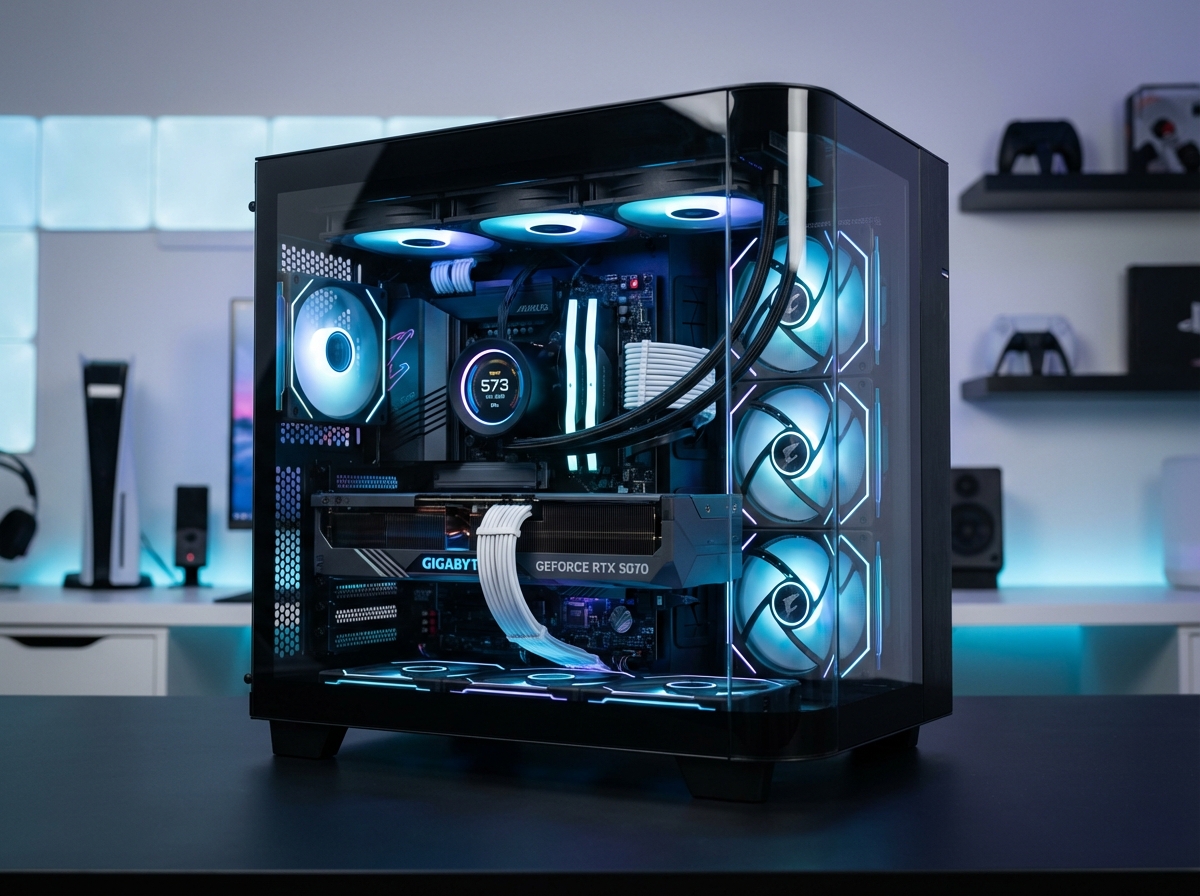
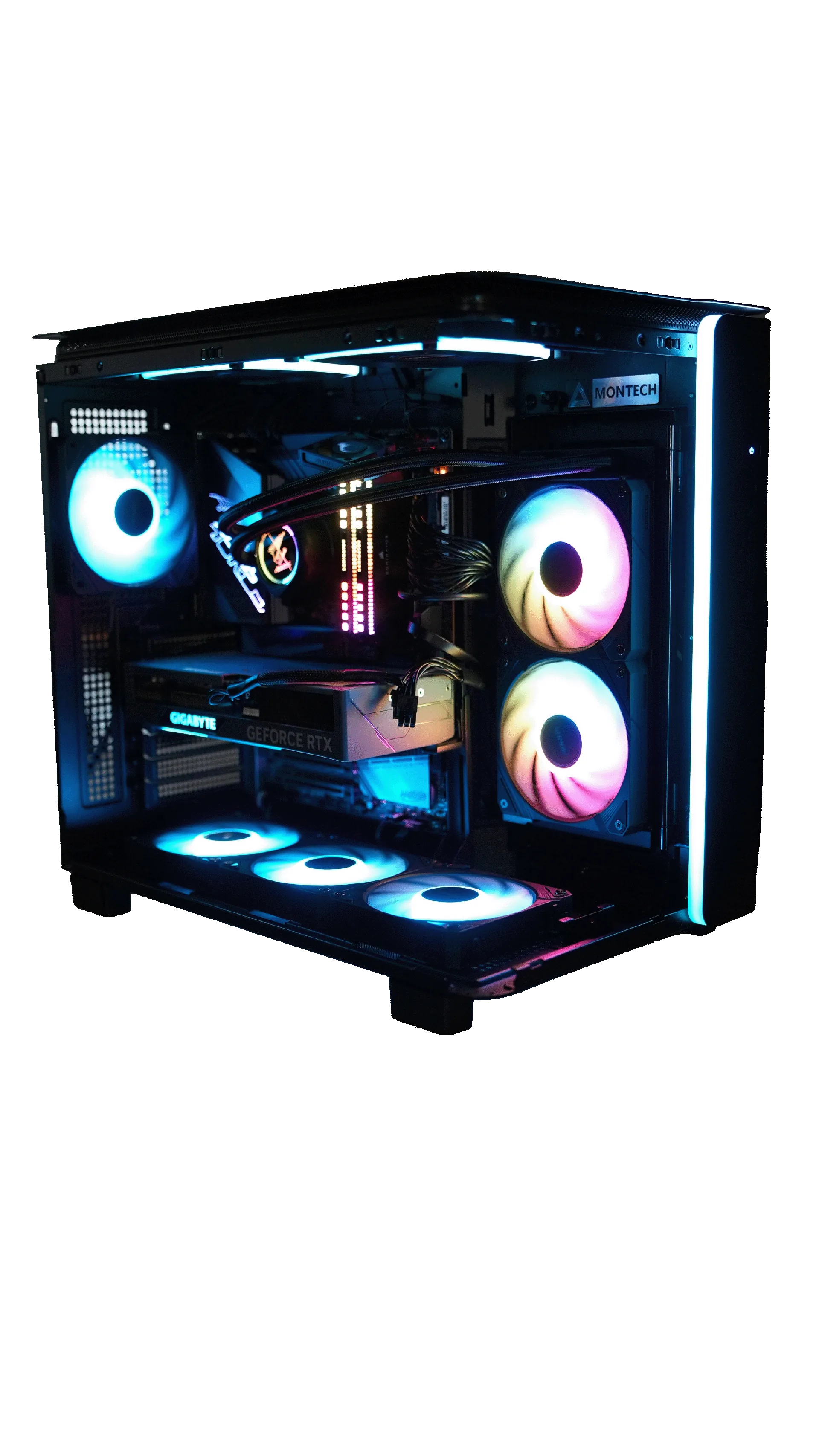
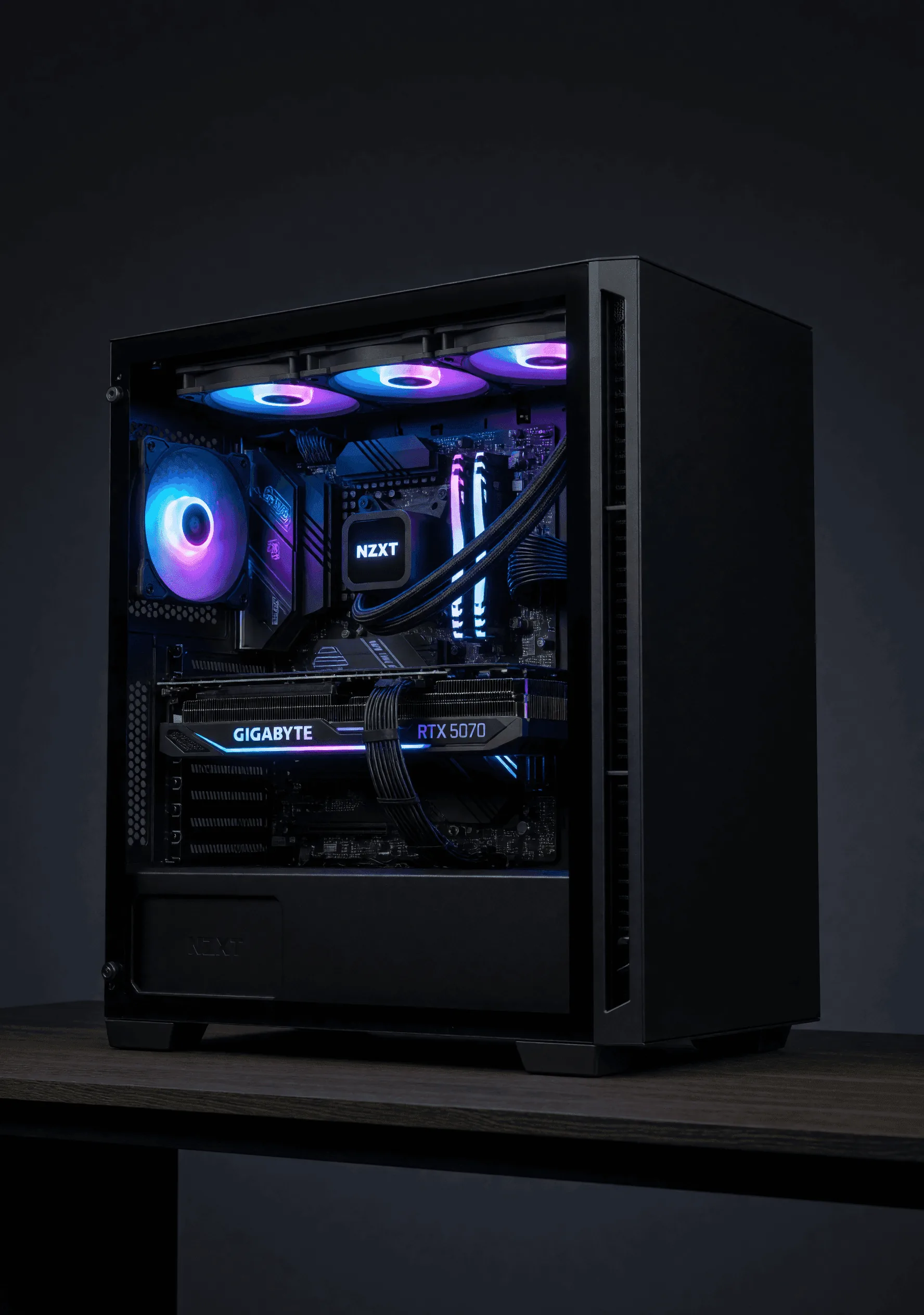
The Wrangler pairs an RTX 5070 Ti with a Ryzen 7 9800X3D or Core Ultra 7 265K, 32GB of DDR5 and a 2TB NVMe drive. Want a 4K path tracing rig instead? Spec it out in the Custom Builder.
SEE THE WRANGLER OPEN THE CUSTOM BUILDERSOURCES
- DSOGaming: Phantom Blade Zero gets official PC requirements
- Digital Citizen: Phantom Blade Zero PC requirements target RTX 5080 for 4K 60 FPS path tracing
- Prima Games: Phantom Blade Zero PC requirements revealed as pre-orders go live
- TweakTown: Phantom Blade Zero on PC will launch with DLSS 4.5 and ray tracing on day one
- Gematsu: Phantom Blade Zero delayed to October 29
- GamerFuzion: Phantom Blade Zero PS5 download size and preload date
- WindowsForum: Phantom Blade Zero PC requirements, SSD space and PS5 download explained
- Khel Now: Phantom Blade Zero pre-load, download size and release time